A Professional's Take on the New Hd 599
Introduction
The Sennheiser HD 599 has long been a fixture in the entry-to-mid-level audiophile market, praised for its approachable tuning, comfort, and value. This article examines the "new" HD 599 from the perspective of a professional reviewer: how it sounds, how it behaves in real-world scenarios, and what buyers who care about fidelity, comfort, or practical use should expect. The goal is to provide practical guidance to prospective buyers—whether they want a relaxed home listening headphone, a comfortable option for long sessions, or a reference-quality upgrade over mainstream consumer cans.
Design and Build: Form Meets Practical Comfort
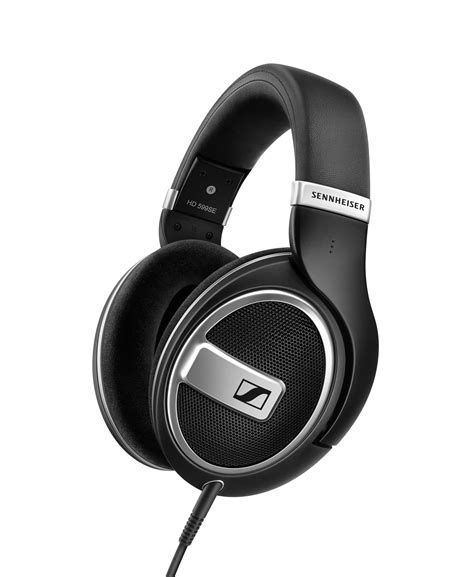
On first impression, the HD 599 follows Sennheiser's tradition of understated, functional design. The open-back, over-ear construction uses a lightweight plastic frame with ample padding on the headband and plush velour ear cups. That combination prioritizes comfort for extended listening sessions—an important factor for anyone who spends hours with music, podcasts, or audio editing.
Practical considerations: the open-back architecture means the HD 599 leaks sound and allows ambient noise in, so it's best for quiet environments. The cable is detachable and terminates in a standard jack, which makes the headphone serviceable and flexible for upgrades or replacement. For buyers who prioritize durability above all else (metal chassis, IP ratings), the HD 599 is not a heavy-duty travel companion; rather, it is designed for stationary, domestic use.
Sound Signature and Performance
Sound is the primary concern for most buyers, and the HD 599 presents a character that is clearly aimed at musical enjoyment rather than clinical neutrality. The tuning is often described as slightly warm and smooth with an emphasis on midrange clarity—vocals and acoustic instruments come forward with a natural timbre. This makes the HD 599 very enjoyable for vocal-centric genres such as indie, singer-songwriter, jazz, and acoustic folk.
Bass
The bass of the HD 599 is present and controlled rather than emphatic. It extends well enough for a satisfying foundation on pop and rock tracks, but it does not aim for sub-bass authority or the slam favored by electronic or bass-heavy music fans. For those who prefer a more visceral low end, pairing the HD 599 with a slightly bass-forward source, or using a small EQ boost in the sub-100 Hz region, yields better results without compromising midrange clarity.
Midrange
Midrange performance is the HD 599's strength. Instruments have good body and voices are intimate, making the headphones very effective for attentive listening. The presentation is slightly forward in the lower mids, which enhances perceived warmth and presence. This is appealing for listeners who prioritize vocal detail and natural-sounding acoustic instruments.
Treble and Detail
The treble is smooth and non-aggressive. Detail retrieval is competent but not surgical—the HD 599 does not emphasize micro-details to the extent of reference or studio monitor headphones. As a result, fatigue is minimal even during long sessions. The treble extension provides enough air for classical and orchestral pieces to sound airy, though the most analytically revealing recordings will expose the HD 599's limitations in resolving the deepest layers of texture.
Soundstage and Imaging
Being open-back, the HD 599 offers a more expansive soundstage than closed-back designs in its price tier. Images are placed with reasonable clarity, giving a sense of space and instrument separation that benefits orchestral music and live recordings. It is not a holographic, ultra-wide stage like some high-end open models, but it is more open and natural than typical consumer headphones.
Dynamics and Resolution
Dynamics are lively enough for most listeners; transients have good immediacy without sounding overly sharp. Resolution is excellent for the price class—detail and texture are present, though not to the level required for critical mastering work. For casual mastering or precision-critical tasks, professionals will notice that the HD 599 smooths some extremes and is not intended as a neutral reference monitor.
Shop the latest Audio & Headphones picks on Amazon.
Browse Now →Real-World Use Cases
The HD 599 suits several real-world scenarios particularly well:
- Home listening and leisure: Ideal for those who want a relaxed, musical presentation. The comfort and sound signature make it a default choice for evening listening sessions.
- Critical listening with caveats: Appropriate for mixing references when combined with neutral monitors—useful to check how mixes translate to non-analytic, consumer-style equipment.
- Streaming and multimedia: Excellent for watching films or streaming concerts at home where a wide soundstage and natural timbre improve immersion.
- Gaming at home: Offers good positional cues and realism in quiet environments. However, because it is open-back, it leaks sound and will reveal game audio to nearby listeners.
Conversely, the HD 599 is not suitable for commuting, plane travel, or recording sessions where isolation and leakage control are required.
Pairing, Amplification, and Source Considerations
The HD 599 is forgiving with low-powered sources because of its moderate impedance and decent sensitivity. Typical laptop outputs or mobile devices will drive it to comfortable levels, but a good desktop DAC/amp or a quality headphone amplifier will unlock improved dynamics, cleaner bass control, and a smoother treble. Audiophiles should consider pairing the HD 599 with a neutral DAC or amp that preserves its warm midrange rather than pushing coloration in the opposite direction.
Because the headphone is open and revealing in its own way, the pairing choice has a measurable impact: warm sources will accentuate body and richness; neutral sources will reveal more midrange detail and clarity. Buyers who plan to use dedicated amplifiers should aim for modest gain and low output impedance to preserve damping and transient response.
Accessories and Serviceability
The HD 599 ships with a detachable cable and standard jack, which improves long-term serviceability. Replacement ear pads are widely available and straightforward to fit, an advantage for anyone who values longevity. There is typically no flight case or heavy-duty carrying solution included, which aligns with the product's at-home focus.
Pros & Cons
- Pros:
- Comfortable, lightweight design suitable for long listening sessions
- Warm, musical midrange that flatters vocals and acoustic instruments
- Open-back soundstage gives a natural sense of space
- Detachable cable and replaceable pads improve serviceability
- Reasonable synergy with a range of sources—good value for home listening
- Cons:
- Open-back design leaks sound and offers no isolation
- Bass is controlled rather than emphatic—may disappoint bass-heads
- Not as analytically revealing as high-end reference headphones
- Build is comfortable but not the most rugged for transport
Comparison Table: HD 599 vs. Related Sennheiser Models
| Model | Type | Characteristic Sound | Best Use Case | Position in Line |
|---|---|---|---|---|
| HD 599 | Open-back, dynamic | Warm, mid-forward, smooth treble | Home listening, vocal/instrumental music, long sessions | Entry-to-mid audiophile |
| HD 560S | Open-back, dynamic | More neutral, slightly leaner low end | Critical listening, those seeking neutrality in the same price tier | Neutral-oriented mid-range |
| HD 600 | Open-back, dynamic (reference) | Analytical, balanced, high resolution | Serious audiophiles and professional monitoring | Higher-end reference series |
Buying Guide: What Matters When Choosing the HD 599
Buyers should consider a handful of practical criteria when evaluating whether the HD 599 is the right choice.
1. Intended Environment
The HD 599 excels in quiet, domestic environments. It is not designed for noisy public spaces. If portability and isolation are priorities, a closed-back or noise-cancelling headphone would be a better fit.
2. Music Preferences
If the listener favors vocals, acoustic music, jazz, or orchestral recordings, the HD 599's midrange-forward tuning will be appealing. Fans of heavy electronic or bass-heavy modern pop may find the low end too restrained without EQ or an amp that adds weight.
Looking for the best Audio & Headphones deals on Amazon?
Browse Now →3. Source Equipment
The HD 599 is relatively easy to drive, but buyers who want the best out of it should plan for a clean headphone output—either a desktop DAC/amp or a high-quality portable DAC for on-desk use. Avoid pairing it with highly colored or overly bright source equipment if the goal is to preserve the headphone’s balanced warmth.
4. Comfort and Session Length
Comfort is a major selling point. People who listen for multiple hours—editing, mixing casual projects, or enjoying long albums—will appreciate the headband and ear pad choices. Try to audition for length (15–30 minutes) to evaluate clamping force and pressure distribution.
5. Longevity and Maintenance
Check for detachable cables and replaceable pads. Those planning long-term ownership should budget for replacement pads after the first couple of years of heavy use. The HD 599’s serviceability is a practical strength.
6. Value and Alternatives
Consider what matters more: a musical, forgiving headphone or a flat, reference tool. The HD 599 leans toward music enjoyment and comfort; alternatives in the same category can favor neutrality or resolution. Evaluate trade-offs—some competitors offer a tighter bass or greater analytical detail, which may be more useful for professional tasks.
7. Audition and Return Policy
Whenever possible, audition the headphone with familiar tracks and a source similar to what will be used daily. If purchasing online, confirm the return policy and any warranty terms—this reduces buyer risk should the sound signature not match expectations.
Practical Tips for New Owners
- Break-in expectations: a short burn-in period may slightly change the perceived treble and soundstage; major changes are unlikely, so rely on initial impressions.
- Small EQ adjustments: modest boosts below 100 Hz or minor boosts around 8–10 kHz can tailor the HD 599 to personal tastes without harming tonal balance.
- Use in mixed environments: pair the HD 599 with closed-back headphones when isolation is required, keeping the HD 599 for at-home reference checks and enjoyment.
- Pad care: clean velour pads periodically and replace them when compression reduces comfort or seal characteristics.
Conclusion
The HD 599 remains a compelling choice for buyers seeking comfortable, musically satisfying open-back headphones for home use. Its warm, mid-forward presentation flatters vocals and acoustic instruments, and the open design offers a pleasant sense of space. While it does not replace higher-end reference headphones for critical mastering, it serves as an exceptionally approachable listening tool for anyone who values comfort, natural timbre, and an enjoyable everyday listening experience. Buyers should match the HD 599 to the right environment and source equipment, and consider alternatives only if they require extreme bass impact, strict isolation, or an ultra-analytical sound signature. For what it aims to be—a comfortable, musical headphone for home listening—the HD 599 succeeds admirably.